Every year around this time, retailers start asking the same question: “What are people actually going to buy this holiday season?”
And every year, someone answers with a prediction involving luxury cashmere, artisanal olive oil, or some impossible-to-source item that requires a second mortgage and six months of inventory planning. Fortunately, the latest holiday trend report from Faire paints a much more realistic picture.
The biggest gift trends of 2026 aren’t necessarily expensive. They’re tactile. They’re playful. They’re a little whimsical. They’re the kinds of products people pick up and immediately say, “Oh, this is cute.” In other words: dopamine is kinda back.
According to Faire’s retailer search data, holiday shopping is being driven by three major themes: playful stocking stuffers, calming escapes, and accessible luxury. Retailers are actively searching for products that feel special without carrying luxury-level price tags.
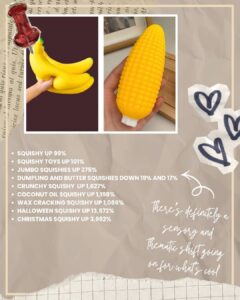
Trend #1: Tiny Treats Are Doing Heavy Lifting
Retailers are seeing explosive demand for sensory products, squishy toys, novelty accessories, and small gifts that create an immediate reaction. Searches for “squishy toys” have skyrocketed, particularly holiday-themed versions.
This trend isn’t really about squishies. It’s about instant gratification. Customers want gifts that deliver a little hit of joy the second they’re opened. For makers, that means looking at your product assortment and asking: “What could become an easy add-on?”
A jewelry brand might create a holiday charm collection. A candle maker could offer mini tins. A soap company could launch travel sizes. A stationery brand might bundle stickers, bookmarks, or pens. The goal is creating products that feel affordable enough to toss into the cart without requiring a family budget meeting.
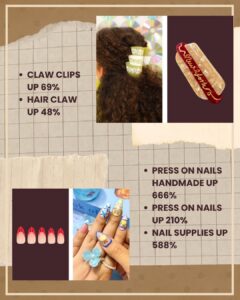
Trend #2: Personality Sells
One of the strongest categories in the report is claw clips. Today’s claw clips double as personality badges. Pickles. Dogs. Sardines. Knitting needles. Holiday motifs. Tiny little declarations of identity clipped directly onto your head.
The lesson here extends far beyond accessories. Customers increasingly buy products that signal who they are. This is especially important for handmade brands. Your product descriptions shouldn’t stop at materials and dimensions.
Talk about the customer.
- Who is this for?
- The cozy homebody?
- The maximalist?
- The plant mom?
- The book lover?
The dog-obsessed friend who owns seventeen dog-themed items and is somehow still shopping for number eighteen? People buy themselves when they buy your products. Make it easy.
Trend #3: Search Keywords Matter More Than Ever
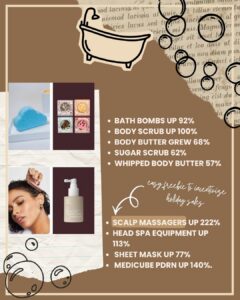
One thing we noticed throughout the report is how specific retailer searches are becoming. Retailers aren’t just searching “nails.” They’re searching “handmade press-on nails.” They’re not searching “jewelry.” They’re searching “chunky beaded necklace.” They’re not searching “bath products.” They’re searching “body butter,” “sugar scrub,” and “bath bombs.” Translation? If you’re using vague product titles, you’re making life harder than it needs to be.
Q4 is the perfect time to revisit:
• Product titles
• Product tags
• Meta descriptions
• Collection descriptions
• Pinterest keywords
• Faire listings
• Shopify product categories
Use the language retailers and customers are already searching. Not the language that sounds clever in your head at 11 PM. A product named “Moonlit Dreams” is lovely. A product named “Lavender Body Butter for Dry Skin” gets found. You can still be poetic in the description. Just let search engines do their job first.
Trend #4: Calm Is a Category
Bath and body products remain one of the strongest gift categories heading into the holidays. Searches for bath bombs, body scrubs, body butter, and related products continue to rise. Meanwhile, Korean beauty-inspired scalp care is having a moment, with scalp massagers and scalp treatments seeing significant growth.
This creates a huge opportunity for beauty brands. Want a simple Q4 promotion? Offer a free scalp massager with purchases over a certain dollar amount.
Create a “Spa Night” bundle. Pair products together into routines instead of selling them individually. Customers love products. But they love solutions even more. Instead of selling a scrub and a body butter, sell a five-minute self-care ritual.
Same products. Higher perceived value. Better average order value.
Trend #5: More Isn’t Out. Maximalism Is Back.
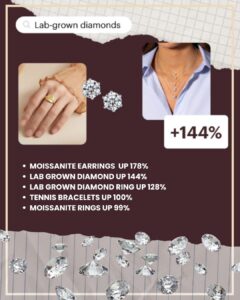
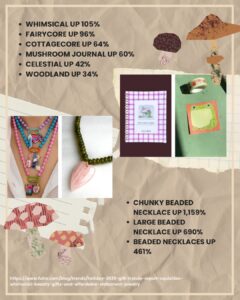
Minimalism had a good run. But according to Faire, chunky beaded necklaces, colorful statement pieces, and maximalist jewelry are continuing their comeback. Searches for chunky beaded necklaces have increased dramatically year over year.
For jewelry brands, this is your sign to stop apologizing for making something bold. The right customer isn’t asking if it’s too much. They’re asking if it comes in another color. This trend also creates natural upsell opportunities:
- “Complete the stack.”
- “Add matching earrings.”
- “Build your holiday party look.”
- “Spend $75 and receive a complimentary jewelry pouch.”
The easier you make it for customers to build a collection, the more likely they are to do exactly that.
The Real Holiday Trend? Thoughtful Abundance.
If there’s one thing tying all of these trends together, it’s that shoppers want gifts that feel generous. Not necessarily expensive.
The brands that win Q4 won’t necessarily have the biggest budgets. They’ll have the strongest understanding of what customers are already looking for—and they’ll make it incredibly easy to add one more thing to the cart.
So before holiday shopping kicks into high gear, take a hard look at your listings, your bundles, your gift-with-purchase offers, and your product descriptions. Because the best holiday marketing strategy isn’t convincing people to want something. It’s showing up when they’re already searching for it.
Understand Shopping Trends
We’re dropping our next newsletter in December 2026. Sign up for exclusive freebies, giveaways, and industry insights.