If your website technically “works” but also quietly gives 2018 energy, you’re not alone. A lot of local businesses are stuck in that awkward middle ground: the site loads, the logo is fine, nobody’s actively on fire… but it’s also not doing much to bring in leads, answer questions, or convince anyone to book, buy, or call.
Sometimes your website just needs a tune-up. Not a total identity crisis.
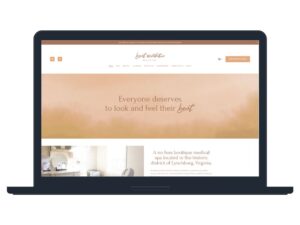
That’s exactly what we recently did for a local aesthetics provider, Best Aesthetics Med Spa by Lisa Best. Her site already had a solid foundation. It looked professional. It functioned well. Clients could find basic information.
But there was one tiny problem. Potential customers were landing on the site and then… wandering around like they’d entered a mall without a directory.
The information people actually wanted wasn’t always easy to find. Services needed more context. Products needed explanation. Search engines needed more content to chew on. And the customer journey needed less “Where do I click next?” energy.
So instead of tossing the entire website into the redesign void, we focused on strategic improvements that made the site more useful, more searchable, and much better at converting curious visitors into actual leads.
Because contrary to what the internet would like you to believe, not every business needs a full relaunch complete with cinematic drone footage and a custom cursor.
Fix Your Website (Instead of Planning a Funeral)
One of the biggest misconceptions we hear from business owners is this: “If my website isn’t performing well, I probably need a brand-new one.”
Maybe. But honestly? Often not.
A full redesign can absolutely make sense when a site is outdated, broken, impossible to manage, or built on technology held together with digital duct tape. But many small business websites already have the core pieces in place. They just need refinement.
Think of it less like rebuilding your house and more like finally organizing the kitchen drawers that currently contain batteries, soy sauce packets, and three mystery keys.
The structure is there. The experience just needs work. That was the case with this project.
The existing website already reflected the client’s brand well. It had the right aesthetic. It was functional. Visitors could book services and learn about the business.
What it lacked was depth, flow, and strategic content structure. So that’s where we focused.

We Added Interior Service Pages (Because One Tiny Paragraph Isn’t Enough)
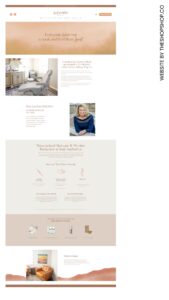
One of the biggest opportunities on the site was expanding the service information. A lot of service-based businesses try to cram every offering onto one page, which sounds efficient until you realize your potential clients are reading a wall of vague text wondering if they’re in the right place. We created dedicated interior pages for individual services, giving each treatment room to breathe.
This accomplished several things immediately:
- Visitors could quickly find the exact service they were researching
- The site became easier to navigate
- The business appeared more authoritative and professional
- Search engines suddenly had way more relevant content to index
And importantly, these pages answered questions before someone had to awkwardly DM “How much does this cost?” at 10:47 PM.
People want information. Especially in industries like aesthetics, wellness, skincare, and medical spa services where customers often do extensive research before booking.
A detailed service page builds trust. A vague sentence and a stock photo of a woman laughing at salad does not.
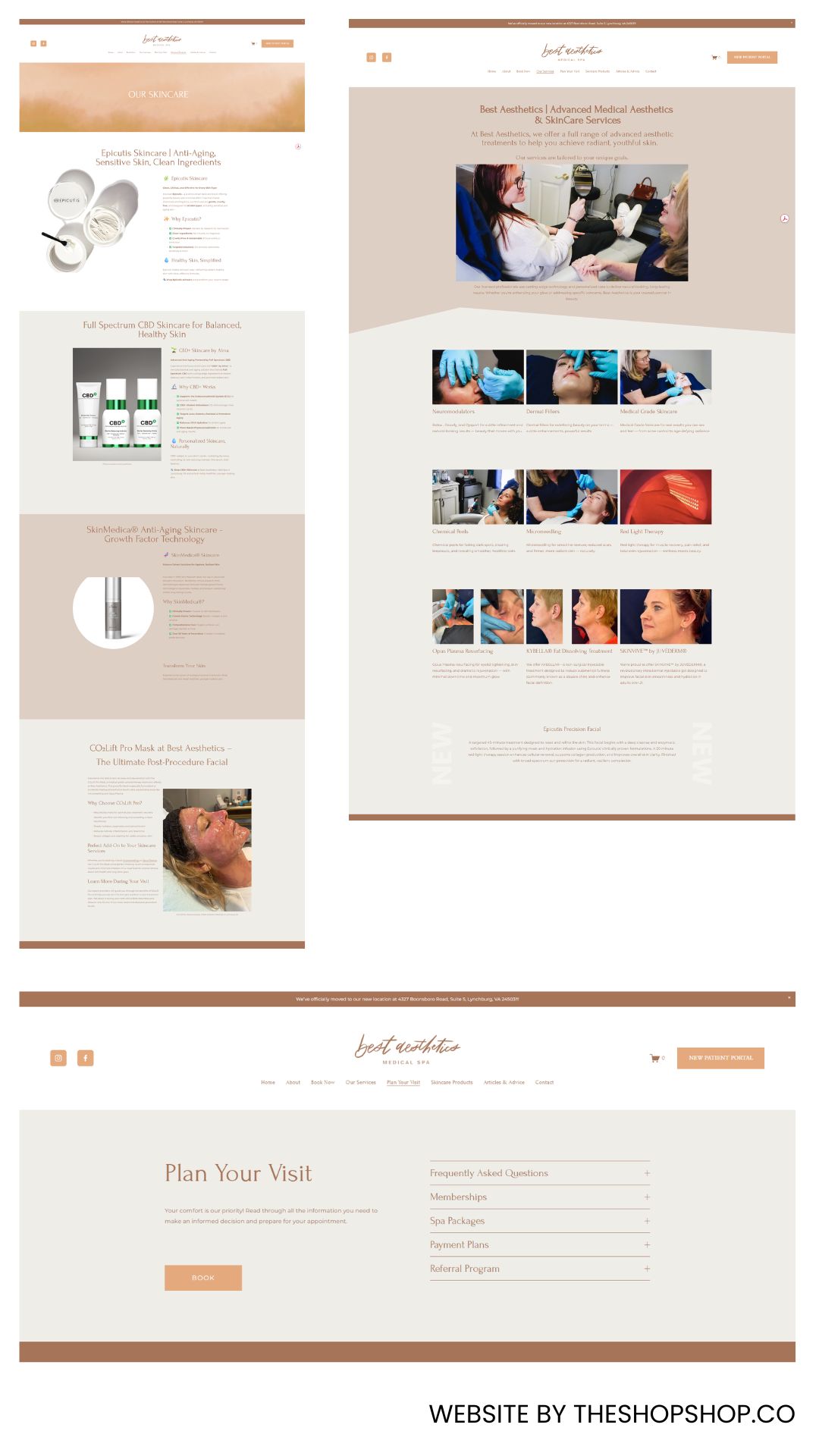
We Expanded Product Information (Because “Available In-Office” Isn’t a Strategy)
The client also sold complementary skincare and aesthetic products, but the website wasn’t doing much to support them. This is incredibly common. Businesses invest in great retail products and then give them approximately three sentences online. Sometimes less. Sometimes just a blurry shelf photo and hope.
We expanded the product information with:
- Better descriptions
- Benefits and usage details
- More helpful supporting copy
- Stronger visual presentation
- Easier linking to external sites
Why does this matter? Because customers are skeptical. They want to know:
- What does this actually do?
- Is it right for me?
- Why is this better than whatever TikTok convinced me to buy last week?
The more useful information your website provides, the more likely people are to trust your recommendations and convert. Also, search engines love detailed content. Tiny product blurbs do not exactly scream “industry authority.”















We Built an FAQ Section That Actually Helps People
Let’s talk about FAQs.
Most FAQ sections are either:
- Completely nonexistent
- Weirdly robotic
- Filled with questions nobody has ever asked in human history
“Can I contact your business?”
Groundbreaking.
Instead, we built an FAQ section around the real questions prospective clients actually search for online.
This helped in two major ways.
First, it improved the user experience. People could quickly get answers without needing to call, email, or abandon the website entirely.
Second, it strengthened SEO performance by naturally incorporating search-friendly phrases and topics people were already looking up.
This is one of the easiest ways to improve a website without redesigning the whole thing: Answer the questions your audience is already typing into Google.
Wild concept, honestly.
We Refined Existing Content Instead of Nuking Everything
Another underrated improvement? Editing what was already there.
Not every website problem requires starting from scratch. Sometimes the copy just needs sharpening.
We optimized headlines, refined messaging, improved readability, and aligned the language more closely with the client’s brand voice.
Because here’s the thing: A website can look beautiful and still confuse people.
If your headlines are vague, your navigation is clunky, or your content sounds like it was generated by a corporate beige machine from 2009, visitors leave. Clear messaging matters.
You don’t need to sound like a Fortune 500 company. You need to sound like a trustworthy human who understands what your customers are looking for.
Why Website Tune-Ups Work So Well for Small Businesses
This is exactly why we love projects like this for local businesses. They’re practical. A strategic website tune-up gives businesses meaningful improvements without:
- Starting over completely
- Blowing the entire marketing budget
- Spending six months in redesign limbo
- Confusing existing customers with a dramatically different site
For many businesses, especially local service providers, this approach is simply smarter.
It’s More Cost-Effective
Full redesigns can be expensive. And not every business needs one.
Strategic improvements allow you to focus your budget where it actually matters:
- Better content
- Better SEO
- Better customer flow
- Better lead generation
Not unnecessary bells and whistles nobody asked for.
It Minimizes Disruption
One of the hidden downsides of major redesigns is that they can temporarily create chaos:
- Broken links
- Lost rankings
- Confused customers
- Technical issues
- Staff panic
- Someone inevitably saying “Wait, where did the contact form go?”
By improving the existing structure instead of replacing it entirely, businesses can continue operating normally while gradually improving performance. No dramatic relaunch countdown required.
Results Happen Faster
When you focus on high-impact improvements instead of rebuilding every pixel from the ground up, results often happen more quickly.
Better navigation, expanded content, improved SEO structure, and clearer messaging can immediately improve:
- Search visibility
- User engagement
- Time on site
- Conversion rates
- Inquiry quality
Sometimes small changes create surprisingly big wins.
Your Website Might Be Closer Than You Think
A lot of business owners assume their website is either “good” or “terrible,” with no middle ground. But there’s a huge space in between. Sometimes your site doesn’t need a total reinvention. It just needs:
- Better organization
- Stronger content
- Smarter SEO
- More useful information
- Clearer pathways for customers
In other words: less chaos, more strategy. That’s what we love helping businesses do. No unnecessary complexity. No bloated redesign process. No pretending every local business needs the digital equivalent of a Super Bowl halftime show.
Just thoughtful improvements that help your website work harder for your business — and make life easier for the people visiting it.
Understand Shopping Trends
We’re dropping our next newsletter in July 2026. Sign up for exclusive freebies, giveaways, and industry insights.