Every year, the internet tries to predict what we’ll be wearing next. Usually, the forecasts involve a color, a silhouette, or some obscure aesthetic that sounds like it was generated by an AI mood board. Sometimes they’re right. Sometimes they’re wildly optimistic.
But every now and then, a prediction lands squarely in the cultural sweet spot.
Enter: the Brooch.
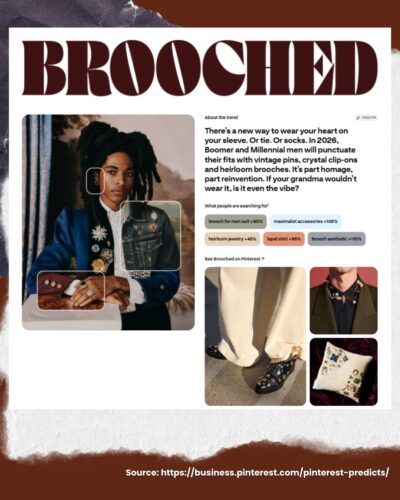
When Pinterest released its 2026 trend forecast, one fashion prediction stood out from the crowd. Alongside lace, icy blue palettes, and maximalist glamour, Pinterest declared that brooches would become one of the year’s defining accessories. Searches related to brooch styling, heirloom jewelry, and vintage pins had already begun climbing sharply, signaling that consumers were looking for ways to add personality, history, and individuality to their outfits. Searches for “brooch aesthetic” alone were up more than 100%, suggesting that people weren’t simply shopping for accessories—they were embracing an entire styling philosophy.
Six months into the year, it turns out Pinterest was onto something.
But the rise of the brooch isn’t really about brooches.
It’s about nostalgia. It’s about storytelling. It’s about rejecting disposable fashion in favor of personal style. And perhaps most importantly for brands, it’s about creating visual content that feels human in an increasingly automated world.
As marketers who spend an unhealthy amount of time analyzing visual trends, we think the brooch trend tells us something much bigger about where fashion, social media, and consumer behavior are headed.
The Brooch Isn’t New. That’s Exactly Why It’s Trending.
Fashion tends to move in cycles. What’s fascinating about the brooch resurgence is that it isn’t tied to a specific decade. Unlike the Y2K revival or the endless parade of 90s references we’ve seen over the past few years, brooches feel timeless. They evoke grandmothers, vintage shops, old Hollywood glamour, family heirlooms, and flea market discoveries all at once.
Pinterest’s forecast described the trend as “part homage, part reinvention,” highlighting how people were styling brooches on jackets, ties, sleeves, and even socks rather than simply pinning them to traditional lapels.
That’s the secret.
The brooch isn’t returning because people suddenly want to dress like Victorian aristocrats. It’s returning because people are tired of looking exactly like everyone else.
For nearly a decade, social media fashion was dominated by clean lines, neutral palettes, and algorithm-approved minimalism. Every feed began to blur together. The same beige trench coat. The same white sneakers. The same perfectly curated capsule wardrobe.
The brooch represents a rebellion against that sameness.
It’s weird. It’s personal. It’s often impossible to replicate because many pieces are vintage or one-of-a-kind. And in a world where everyone can buy the same dress with two clicks, uniqueness has become a luxury.

The One Styling Hack That Instantly Makes Any Outfit Less Boring from The Every Girl
:max_bytes(150000):strip_icc():format(webp)/brooches-940d0291377d418888dd615c1a71f95b.png)
Brooches Have Entered a New Era—Here’s How You Can Style Them in 2025 from Byrdie
Thrifting Isn’t Alternative Anymore. It’s Mainstream Cool.
The brooch trend also reflects another massive shift we’ve been watching for years: the rise of thrift culture. At one point, thrifting was mostly associated with budget-conscious shoppers, vintage enthusiasts, and dedicated treasure hunters. Today, it’s become one of fashion’s biggest status symbols.
The coolest outfit in the room isn’t necessarily the most expensive anymore. It’s the one nobody else can find. That’s a fundamental change.
Fast fashion built its empire on accessibility and replication. A trend appeared on a runway, manufacturers copied it, and within weeks millions of consumers could buy nearly identical versions.
But consumers—especially younger ones—have become increasingly interested in finding pieces with history, character, and individuality. Pinterest’s own trend reporting points to growing interest in heirloom jewelry, vintage-inspired styling, and accessories that feel collected rather than purchased.
The brooch fits perfectly into this mindset. Walk into any thrift store, antique mall, estate sale, or flea market and you’ll find trays full of forgotten pins waiting for a second life. For a few dollars, shoppers can discover something that feels completely unique. That’s a lot more exciting than buying the same accessory everyone else saw in an Instagram ad.

Not Your Grandmother’s Brooch — How the Unlikely Accessory Is Making an Impact With Young Shoppers from WWD
The Analog Renaissance
If you’ve noticed a growing obsession with film photography, vinyl records, handwritten letters, vintage cameras, typewriters, and physical books, you’re not imagining things. We’re in the middle of what many trend forecasters are calling an analog renaissance.
Pinterest’s broader 2026 forecast highlighted a renewed fascination with slower, more tactile experiences, including handwritten correspondence and “poet-core” aesthetics that romanticize creativity, craftsmanship, and intentional living.
Fashion is participating in the same movement. Consumers are increasingly drawn to things that feel real.
A brooch has weight. It has texture. It often carries visible signs of age and wear. Unlike a digital filter or AI-generated aesthetic, a vintage brooch has an actual history attached to it.
People are craving those stories. After years of hyper-digital experiences, the appeal of tangible objects feels stronger than ever. That’s why trends like visible mending, handcrafted jewelry, vintage fashion, and heirloom accessories continue gaining momentum. Consumers aren’t simply buying products. They’re buying connection.
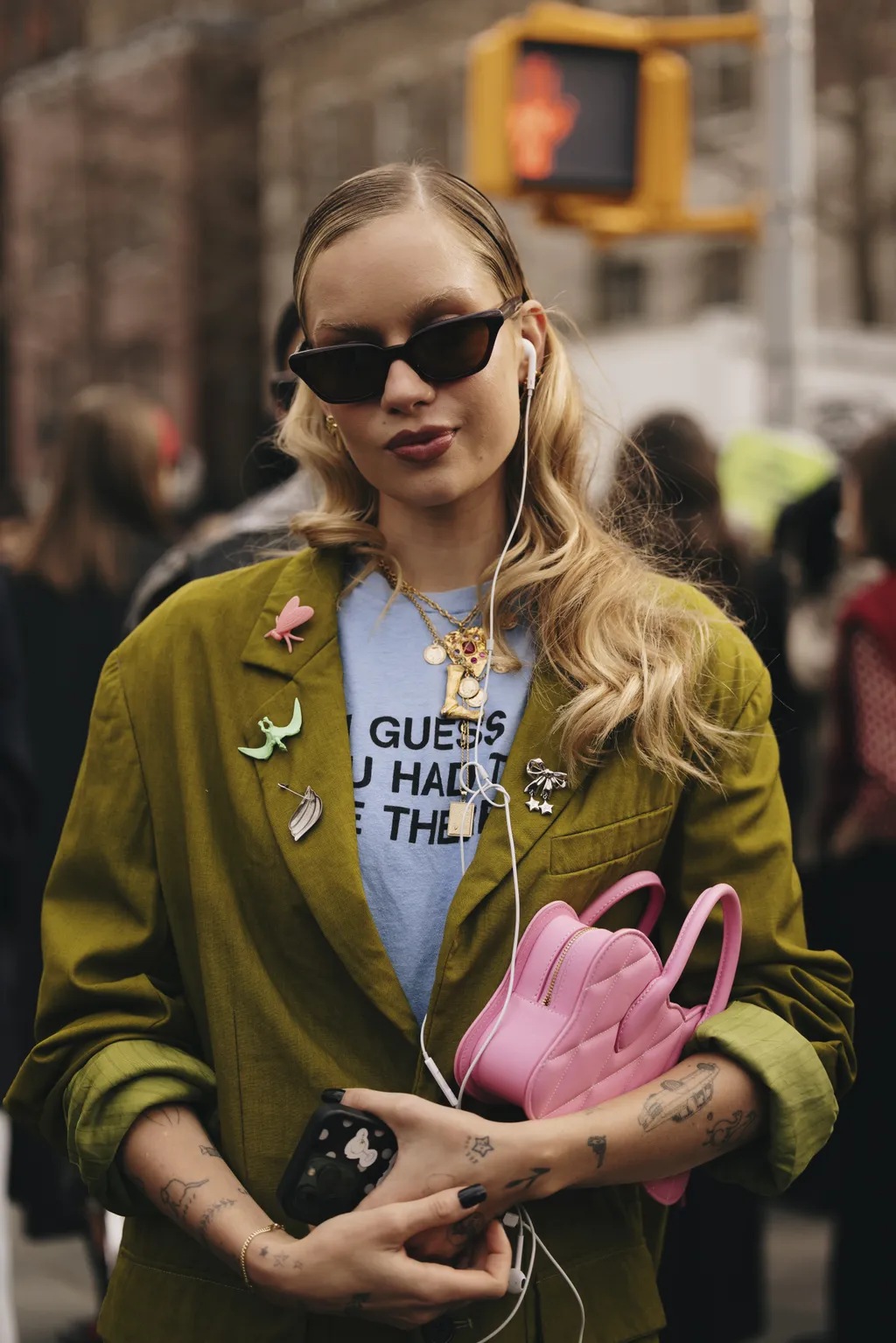
Street Style Is Bringing the Antique Brooch Back from Marie Claire
Why This Matters for Fashion Brands
Here’s where things get interesting from a marketing perspective. The brooch trend isn’t important because you should start selling brooches. It’s important because it reveals what consumers are responding to visually.
Social media has become increasingly polished over the past decade. Professional photography, perfectly color-graded content, and meticulously curated feeds became the norm. Ironically, that level of perfection now feels somewhat predictable.
The content that’s performing well today often includes imperfections, layers, personality, and signs of human involvement. A brooch naturally introduces all of those elements.
Consider a simple outfit photograph. Without accessories, it’s a dress. Add a vintage brooch collected from an estate sale, and suddenly there’s a story.
- Where did it come from?
- Who owned it before?
- Why was it chosen?
- What does it say about the wearer?
Those questions create intrigue. And intrigue creates engagement.
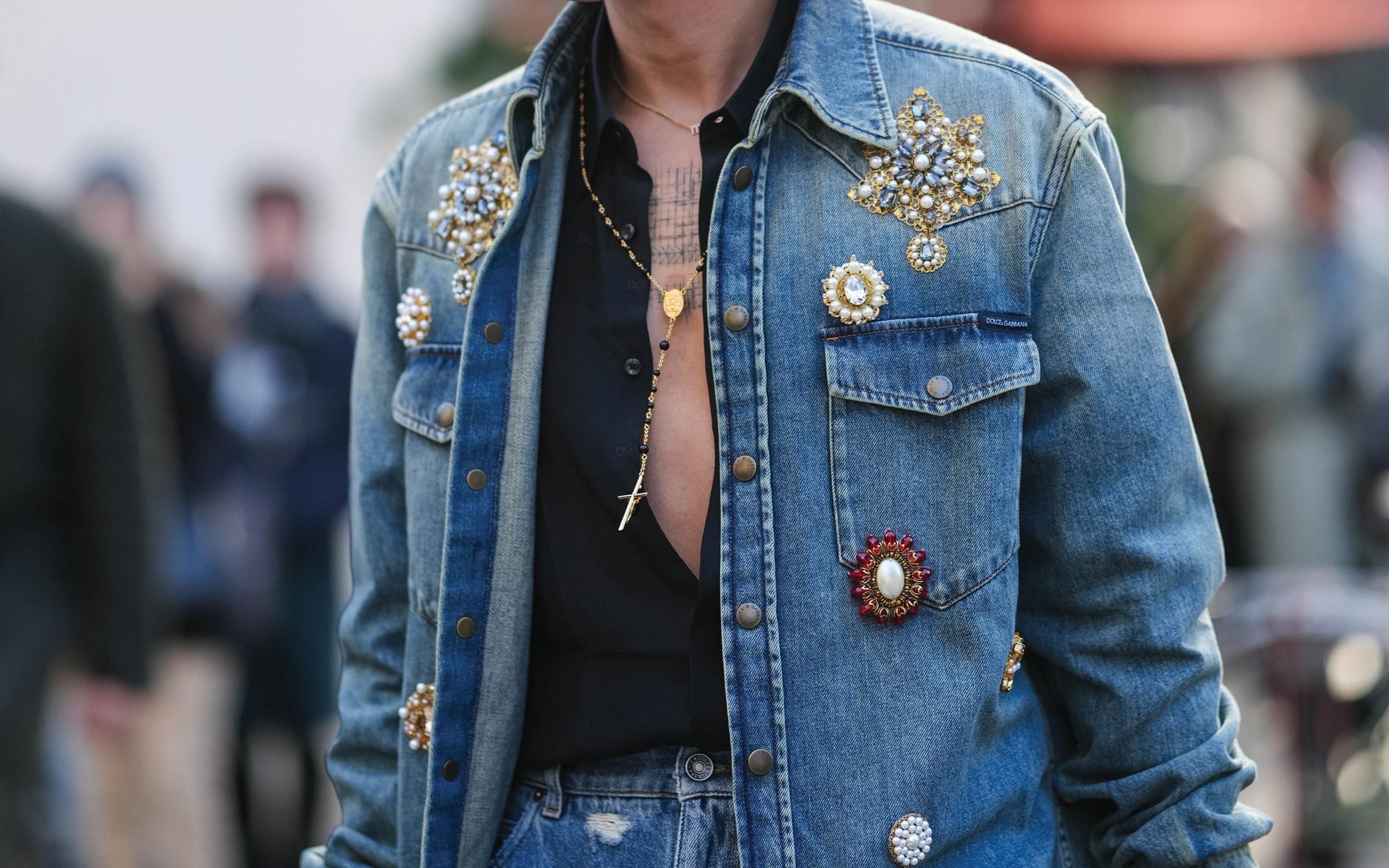
Yes, You Do Need a Brooch in Your Accessory Rotation from Fashion Magazine
The Secret Weapon for Better Product Photography
One of the biggest challenges fashion brands face is making product photography feel distinctive. The internet is crowded with white backgrounds, neutral poses, and clean studio lighting. While those images serve a purpose, they often struggle to create emotional connection.
Accessories like brooches help solve that problem. They create focal points. They add visual texture. They introduce contrast and personality.
Most importantly, they help products feel styled rather than displayed. That’s a subtle but critical distinction. Consumers don’t buy products. They buy possibilities.
A well-styled image helps shoppers imagine how a product fits into their lives. A brooch can transform a basic blazer into a statement piece. It can make a simple dress feel editorial. It can turn a standard flat lay into a visual story. For brands creating content on Instagram, Pinterest, TikTok, or email campaigns, these small styling choices can have a significant impact.
:max_bytes(150000):strip_icc():format(webp)/GettyImages-1190627592-b874c5a19c47431bb302017d7321db77.jpg)
Your Grandmother’s Favorite Accessory Is 2025’s Most Stylish Comeback Trend from Southern Living
Pinterest Was Predicting More Than an Accessory
When Pinterest identified brooches as a trend, many people initially viewed it as a niche fashion prediction. But looking back, it feels more like a signal. The platform wasn’t just forecasting jewelry. It was forecasting a broader desire for individuality, nostalgia, craftsmanship, and self-expression.
The same cultural forces driving interest in brooches are also fueling the popularity of vintage fashion, heirloom-inspired jewelry, thrifted home décor, handwritten letters, and analog hobbies. People are looking backward to move forward. They’re pulling inspiration from previous generations while adapting it to modern life. That’s why the trend feels surprisingly fresh despite being rooted in one of fashion’s oldest accessories.
:max_bytes(150000):strip_icc():format(webp)/julia-7be53afb881c4f68a0a07dd2e5e4ceb2.jpg)
I Wore Brooches Every Day for a Week, and It Made Me Fall Back in Love With My Clothes from InStyle
What Shop Owners Should Do Next
If you’re a fashion brand, boutique owner, or lifestyle retailer, you don’t necessarily need to launch a brooch collection tomorrow. Instead, pay attention to the larger lesson. Consumers are rewarding personality. They’re responding to styling choices that feel collected rather than manufactured. They’re gravitating toward content that tells stories instead of simply showcasing products.
Consider incorporating vintage accessories into product photography. Experiment with layered styling. Mix modern pieces with thrifted finds. Create content that feels curated by a person rather than generated by an algorithm. Most importantly, embrace visual details. The details are often what stop the scroll.
A brooch. A vintage ring. A handwritten note. A worn leather journal. A film photograph tucked into the frame. These elements communicate authenticity in ways polished perfection no longer can.

Brooches Are Having a Moment. Here Are 8 Unexpected Ways to Style Them. from Harpers Bazaar
The Final Pin
The brooch may be one of the most unlikely trend stories of 2026. It’s small. It’s old-fashioned. It’s easy to overlook. And yet that’s exactly why it matters. With Silicon Valley obsessed with scale, speed, and endless content production, the brooch reminds us that consumers still notice the little things. Especially when those little things feel personal.
As marketers, we’re always watching visual culture evolve. Sometimes the biggest shifts arrive with flashy new technology or groundbreaking design movements. And sometimes they arrive pinned quietly to a vintage blazer.
The brands paying attention know the difference. And that’s why Pinterest’s “Brooched” prediction wasn’t really about jewelry at all. It was about the return of character. And judging by what we’ve seen so far this year, character is officially back in style.
Additional Reading:
- Brooches Are Having a Moment. Here Are 8 Unexpected Ways to Style Them. from Harpers Bazaar
- 15 Fall Jewelry & Accessory Trends to Know From the 2025 Collections from Vogue
- Brooches have had an update for 2026: here are the ones that’ll brighten up your look, and sell out from Good Housekeeping
- The One Styling Hack That Instantly Makes Any Outfit Less Boring from The Every Girl
- Brooches Are Taking Over For 2024 from The Zoe Report
- I Wore Brooches Every Day for a Week, and It Made Me Fall Back in Love With My Clothes from InStyle
- Brooches Have Entered a New Era—Here’s How You Can Style Them in 2025 from Byrdie
- Not Your Grandmother’s Brooch — How the Unlikely Accessory Is Making an Impact With Young Shoppers from WWD
- Street Style Is Bringing the Antique Brooch Back from Marie Claire
- Yes, You Do Need a Brooch in Your Accessory Rotation from Fashion Magazine
- Your Grandmother’s Favorite Accessory Is 2025’s Most Stylish Comeback Trend from Southern Living
- The Surprising Return of the Brooch in 2025 from Hello Magazine
- Sorry, Statement Earrings—This Is the Accessory Making Party Outfits Look Most Elegant from Who What Wear
Understand Shopping Trends
We’re dropping our next newsletter in December 2026. Sign up for exclusive freebies, giveaways, and industry insights.